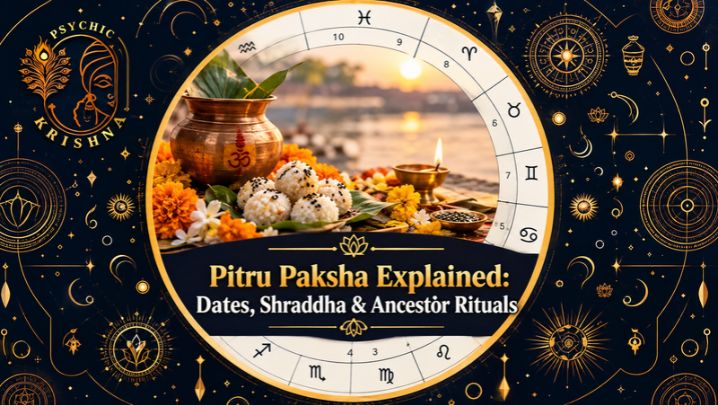
Pitru Paksha 2026: Complete Guide to Ancestral Rituals
Pitru Paksha is a significant time in the Hindu calendar that is devoted to honoring, remembering, and carrying out customary rites for ancestors. According to Panchang calculations, Pitru Paksha starts on September 27 and ends on October 10 with Sarva Pitru Amavasya in 2026.
Many families have concerns during this time regarding Shraddha, Pind Daan, Tarpan, appropriate offerings, significant occasions, and what should and shouldn’t be done. This article provides straightforward and useful answers to frequently asked issues regarding Pitru Paksha 2026.
What Is Pitru Paksha?
Pitru Paksha is customarily celebrated for around fifteen lunar days in Krishna Paksha during the Ashwin month. This time is dedicated to honoring departed ancestors, with families engaging in rituals that convey appreciation and respect.
The main focus is not merely on conducting a ceremony. It encompasses reliving one’s family legacy and recognizing the efforts of earlier generations.
As per customary Hindu beliefs, Shraddha can consist of food and water offerings, prayers, Tarpan, charitable acts, and various traditional observances.
When Is Pitru Paksha 2026?
For the year 2026, the Pitru Paksha observance starts on September 27. The series of Shraddha dates carries on into October, culminating with Sarva Pitru Amavasya on October 10.
The specific dates are as follows:
Pratipada Shraddha – September 27
Dwitiya Shraddha – September 28
Tritiya Shraddha – September 29
Chaturthi Shraddha – September 30
Panchami Shraddha – September 30
Shashthi Shraddha – October 1
Saptami Shraddha – October 2
Ashtami Shraddha – October 3
Navami Shraddha – October 4
Dashami Shraddha – October 5
Ekadashi Shraddha – October 6
Dwadashi Shraddha – October 7
Trayodashi Shraddha – October 8
Chaturdashi Shraddha – October 9
Sarva Pitru Amavasya – October 10.
Accurate observance might differ based on region, cultural calendar, and local Panchang, thus families are advised to confirm timings pertinent to their area.
 Why is Sarva Pitru Amavasya important?
Sarva Pitru Amavasya marks the final day of Pitru Paksha and is typically viewed as a particularly important time for honoring one’s forebears. It is usually recognized when the exact death Tithi of an ancestor is not known or when families desire to conduct a joint offering for their ancestors. This day is additionally referred to as Mahalaya Amavasya.
What rituals are performed during Pitru Paksha?
Common conventional rituals involve Shraddha, Tarpan, Pind Daan, providing meals, illuminating a lamp, praying, and engaging in charitable acts. Families might cook customary dishes and present them with reverence prior to distributing them to others. Certain customs also highlight the importance of feeding cows, birds, or individuals in need. The specifics of these rituals can vary based on families, areas, communities, and religious customs, so it is advisable to adhere to local practices.
Can astrology help during Pitru Paksha?
Astrology may be referred to during Pitru Paksha to gain insight into conventional ideas like Pitru Dosha, lineage patterns, and spiritual rituals. In the realm of Vedic astrology, astrologers often analyze a natal chart for alignments that are customarily seen as related to ancestral issues. These interpretations are a component of astrological customs and should not be viewed as a scientific assessment or evidence of ancestral impact.
What should families remember during Pitru Paksha?
The primary aim of Pitru Paksha revolves around honoring and expressing appreciation instead of evoking fear. This time allows families to pay tribute to their dear ones, uphold familial customs, engage in acts of kindness, and contemplate the principles handed down through the years. When conducting a ceremony, it is essential to consider the accurate Tithi and regional Muhurat. Because timings vary based on geographic location, consulting a local Panchang or an experienced priest can offer the right timetable.
What if you do not know the ancestor’s Tithi?
In the absence of a specific death Tithi, Sarva Pitru Amavasya is commonly viewed as a significant occasion for honoring ancestors. It is advisable for families to seek advice from a priest or a Panchang specialist instead of selecting a date arbitrarily.
Are there restrictions during Pitru Paksha?
Practices differ among various families and communities. Some adhere to specific food or ceremonial limitations, while others prioritize prayer, remembrance, acts of kindness, and Shraddha. In the context of a blog centered on astrology, it is important to frame spiritual beliefs and astrological insights as time-honored traditions, refrain from making absolute assertions, and motivate readers to check local timings.
Pitru Paksha 2026 presents families with a chance to reflect on their forebears and uphold significant customs. From September 27 until October 10, families can follow the relevant Tithi based on their traditions. Whether through Shraddha, Tarpan, charity, prayer, or quiet contemplation, this time can serve as a meaningful display of appreciation and familial unity.